

We spend years preparing our children for a “good” life. What happens when their idea of one looks nothing like ours?

You will know your child as an adult far longer than you’ll know them as a child.
Sit with that for a minute.
Someday, your teenager will be an adult having a spectacularly bad day. Maybe they’ll make a decision they regret. Lose a job. Lose money on a failed investment. Get their heart broken. Maybe they’ll do something incredibly stupid. Something you’ve warned them about a thousand times.
You might never know about it.
Because adults get to decide who they tell things to.
They could call you. They might call someone else. They might tell you six months later, when it’s all blown over. Or they might keep it to themselves and face it alone.
That’s adulthood.
We spend so much of our parenting energy focused on the next assignment, the next argument, the next questionable decision. Managing grades, friendships, responsibilities, curfews. Trying to raise capable, decent humans who can function in the world without us.
All important things.
But I wonder how often we stop to ask ourselves a bigger question.
Are the things we’re working so hard to accomplish today actually building the relationships we want to have tomorrow?
Will our children come to us when things go wrong, or will they learn to hide the things they believe we’ll disapprove of?
And is making sure they know how strongly we disagree worth making it harder for them to come to us when they really need us?

Let’s talk about “better”
Most of us have a pretty clear idea of what “good” parenting should accomplish.
Responsible kids. Good grades. Healthy relationships. Sound judgment. Independence. And, ideally, a teenager who occasionally remembers there’s a dishwasher in the house.
But how did we decide what the “right” outcomes were in the first place?
We all carry our own definitions of “success,” “failure,” “responsibility,” and even what makes someone a “good” person. Definitions shaped by our families, cultures, experiences, and the things we were taught to value along the way.
We absorbed these beliefs so thoroughly that we often forget they’re beliefs at all. They feel like facts.
And then our children start developing their own.
We say we want them to become independent thinkers. But how independent? Independent enough to make decisions we don’t understand?
Would we still consider them “successful” if they chose a life that looked nothing like the one we’d worked so hard to give them?
The Better Path: For What? For Whom?
This was really put to the test for me when my son was about to graduate from college.
If you’ve known me for even a short while, you know that I value education a great deal.
My parents both quit high school. My dad left in tenth grade, and my mom just a few months before graduation. When I was struggling with health issues during my senior year, I was told more than once that I could quit, because they hadn’t graduated and “it wasn’t a big deal”. For many reasons, I wanted to be nothing like them. School was one way I’d make sure of it. I was stubborn about it, and I wanted my family tree to grow in a wildly different direction.
I had dreamed of going to college.
Fantasized about learning and being around other people who felt passionate about it, too. I love being challenged to examine topics I’d never choose to explore on my own. Having my assumptions questioned. I loved absorbing myself in new ideas and sharpening my skills.
As a single mom managing a chronic illness that resulted in frequent hospitalizations and surgeries, it took me fourteen years to earn my bachelor’s degree.
Fourteen years.
I ugly-cried across the stage. My entire fan club was one sweet kid, about to start college himself, whistling and screaming from the stands.
Once I’d finished, I rearranged my world to earn my master’s degree in Marriage and Family Therapy.
In the process of my own education, I worked to instill that love of learning in my son, Caleb, too. I wanted him to have opportunities that I could never dream of. I started college full-time as a pre-med when he went to preschool. We saw each other all the way through our respective degrees, eventually graduating the same year. Him from high school, me from college.
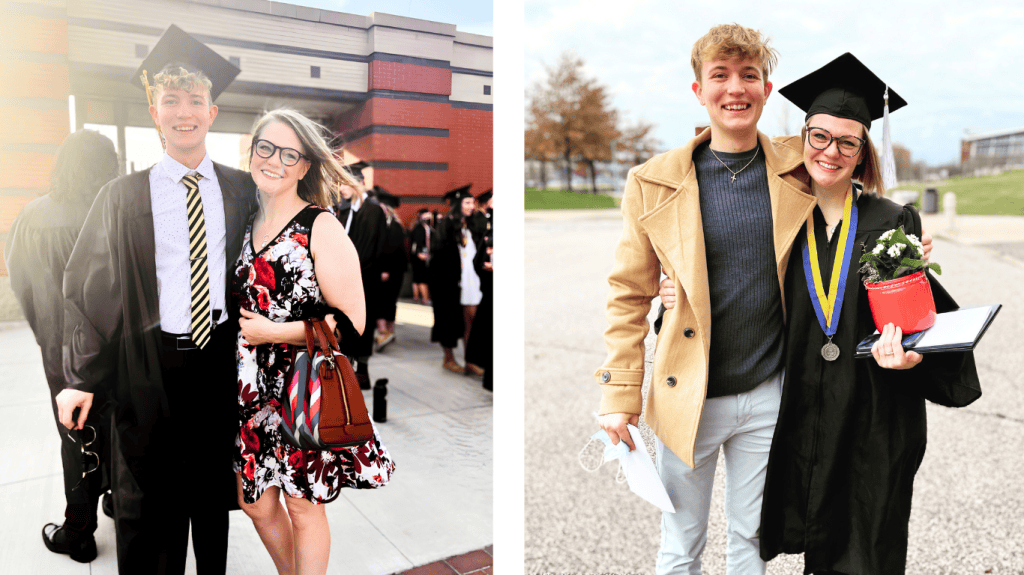
Caleb is curious, outgoing, and has a tendency to make whatever he gets involved in more elaborate than anyone asked for. He’s creative, “extra”, entrepreneurial, and has a keen eye for business.
He was on track to graduate with his bachelor’s degree six months early, and his professors were so impressed with his work that they offered him an opportunity: if he stayed for an additional six months, they’d award him a master’s degree instead of a bachelor’s, with a full scholarship.
I could not have been prouder.
He signed the paperwork that officially made him a teenage master’s degree candidate.
Then, a few months in, he quit.
“I don’t need that piece of paper, Mom.”
Oof.
I remember two competing thoughts.
Lecture
Oh my god, what in the world? OF COURSE you’re going to finish this degree. [Insert parental evidence and sundry points about scholarships, future opportunities, the realities of adulthood, and why this is clearly a terrible decision. Yada yada].
Curiosity
Oh my god. This is the fruit of my labor. He hasn’t let my perceived expectations of him influence his decision. He doesn’t believe my pride in him is connected to him doing the thing I find most valuable in life. I wonder what information he’s working with that led him to feel this was the best move? I’m eager to understand.
Now, admittedly, the first thought was occupying considerably more real estate in my head than the second.
I’m still human. Caleb got my shocked, still-practicing, narrative-mom self.
But the practicing part of me, focusing on curiosity, created enough space to approach the conversation differently.
He believed he’d learned what he needed to succeed, and that the professional experience he wanted to pursue was more valuable to his future than even finishing his bachelor’s degree.
“I’ll finish it one day, Mom, I promise!”
I didn’t agree with his assessment. A master’s degree was still within reach, and the school even offered to let him finish remotely through independent study. He’d be walking away before children, mortgages, careers, and all the things that make returning to school as an adult infinitely more complicated.
But what made his decision so difficult for me wasn’t simply that I thought he was making a mistake.
It was what that particular opportunity meant to me.
A degree was never just a degree to me.
For someone who had spent fourteen years earning a bachelor’s degree, the idea of walking away from a master’s degree that was practically being handed to him was almost incomprehensible.
I was looking at the doors that credential could open. The security it might provide. The value of having that opportunity behind him before life intensified.
He was looking at the professional opportunities already in front of him, and the future he believed he could build without it.
We were evaluating the same decision through two very different sets of experiences.
Of course my initial reaction was to treat my definition of the “better” path as though it were the objectively correct one. Wasn’t it?
I’d worked so hard to teach him to value learning. Maybe I hadn’t considered that he could value it without needing to pursue it the same way I had.
But I wanted to understand how he’d arrived at a conclusion so different from mine.
And because he wasn’t being asked to defend himself against my disappointment, there was room for him to be curious about my perspective, too.
If he had considered my concerns, and still believed his path was the “better” one, then I wanted to know how best to support him.
Because it was his life.
I gave him life. Not another one for me to live.

I genuinely believe people can make the best decisions for themselves when they’re supported, seen, understand their choices, and understand why they’re making their choices. And they can only do that if there’s space to be curious.
There’s no space for curiosity if you have to defend something before you even understand it.
It would have been easy for me to lecture him. And goodness knows, I had the material. But I wanted to understand more than I wanted to convince.
This created room for dialogue. He could consider my concerns without having to defend his decision against them, and I could learn about his reasoning without feeling that understanding it meant endorsing it.
We didn’t have to arrive at the same conclusion. We didn’t.
Caleb is excelling in his career. He’s making a salary that occasionally makes me consider changing professions, and doing work he’s excited about.
He doesn’t regret his decision.
I still suspect he’ll regret not finishing one day, especially when that degree was so easily within reach.
AND. He also wasn’t wrong to bet on himself.
Both things can be true.
What matters most to me is that he is passionately happy with his life, what he’s building, and his choices. It matters that he felt comfortable bringing me a decision he knew I’d have strong feelings about. He could share his thinking, consider mine, and ultimately make his own choice without worrying that our relationship depended on his agreement.
When you’re invited into the big conversations rather than showing up with judgment and opinions, your children actually want your input. They don’t have to dig in and defend their choices before they’ve even had a chance to explore them.
And you get to know the person they’re becoming, rather than spending all your energy trying to direct who that person should be.
That’s the relationship I’m interested in building.
What’s your long game?
I suggest we reconsider the ultimate objectives of parenting.
Forget about straight A’s and perfect manners for a minute.
What are we really after?
For me, it comes down to three things. Autonomy. Resilience. Connection.
I want my son to trust himself and make choices based on his own values, not external pressure. Even from me.
I want him to know how to recover when things go wrong. To understand that “failure” is an inevitable human experience, not an identity or verdict. I want him to be able to come to me if things go sideways, shame-free, not waiting for an “I told you so.”
And I want him to know that our relationship isn’t based on performance. That he can be real with me, even when he knows I won’t agree with him.
We spend years teaching our children how to make decisions, then sometimes struggle to accept that they might use that ability to arrive somewhere we wouldn’t have chosen.
But isn’t that part of what we were trying to accomplish?
We aren’t raising our children to need parents forever.
We’re raising them to stand on their own, and to know they have an ally they can come to forever.
One is about dependency. The other is about trust, growth, and relationship.
Of course, none of this guarantees our children will call us when they’re thirty. They’re becoming people with their own lives, experiences, and choices. That includes choosing how they relate to us. If you want to be invited into the big conversations later, the seeds get planted now.
We can be intentional about the kind of relationship we’re offering our children.
And the teen years are an extraordinary time to do that.
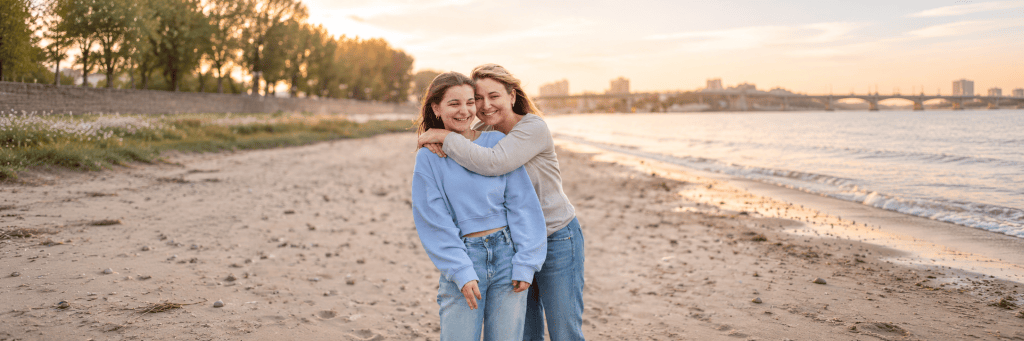
A weekend for the bigger picture
The questions that came up for me with Caleb are ones I encounter regularly in my clinical work. Where did our beliefs take root? What happens when someone we love sees the world differently? And how might our relationships change if we became more curious about those differences?
They’re also at the heart of ROOTS, a two-day intensive I’ve created for parents of teenagers.
I wanted to create a space where parents could step outside the daily grind and examine the beliefs operating underneath their everyday interactions. The ones we’ve carried for so long that we’ve forgotten they’re beliefs at all.
We’ll explore adolescent development, autonomy, accountability, and communication, but the work goes beyond learning different ways to respond. It’s a chance to question assumptions, bring our experiences into conversation with other parents, and consider whether the things we’ve always believed are helping us build the relationships we actually want.
The thinking behind this work extends beyond parenting. The same beliefs shape how we relate to our partners, friends, colleagues, and ourselves. ROOTS brings that inquiry into the context of raising teenagers, but what we discover can change how we engage with everyone in our lives.
Our founding cohort meets January 9–10, 2027, in a Midtown Manhattan loft. It’s a small, discussion-based educational intensive, not therapy, with 8–10 parents and shared meals throughout the weekend.
Two days to examine beliefs that may have been shaping your relationships for decades, and consider which ones you want shaping the decades to come.
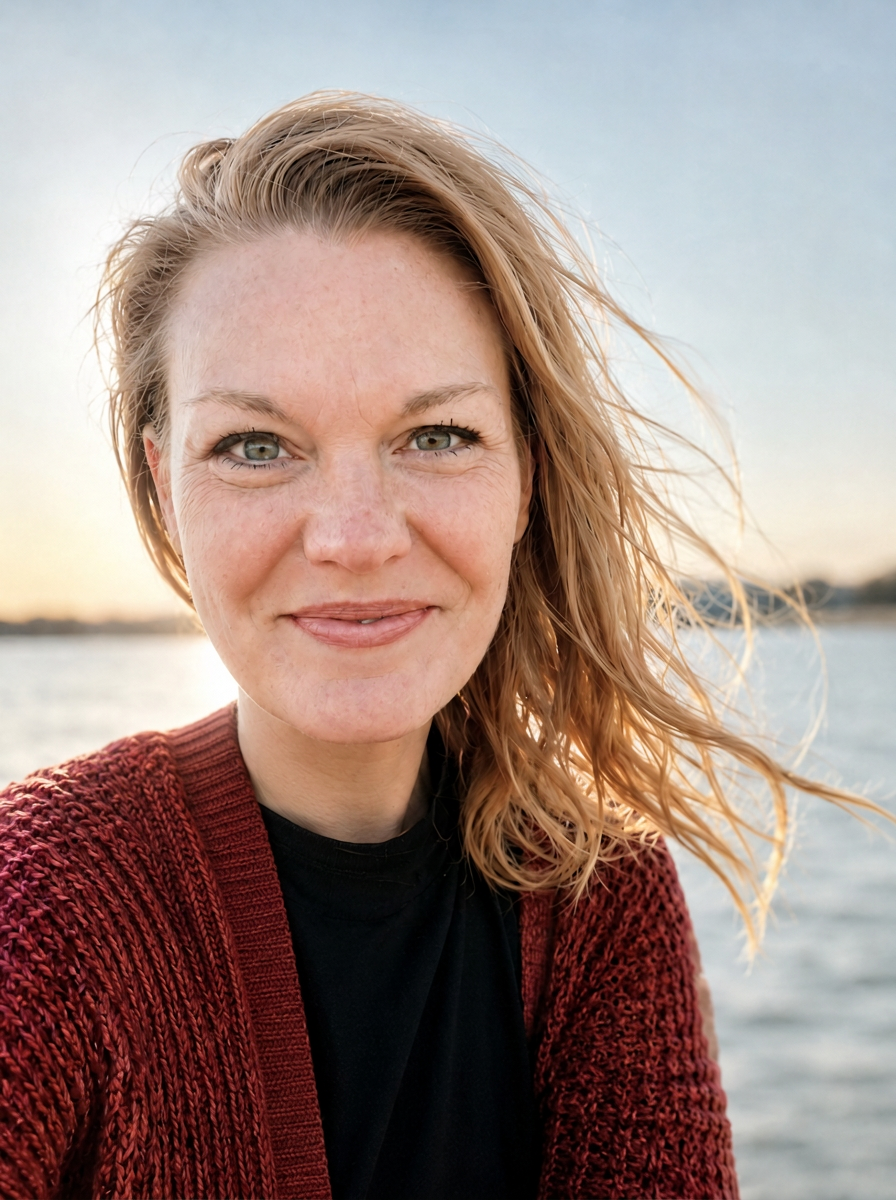
Sharla Cook is a marriage and family therapist associate and founder of Willow & Teak. Her work explores trauma, identity, family relationships, and the ways our beliefs shape how we experience ourselves and others. She is currently writing Beyond the Great Unfurl, a book about parenting through the teenage years toward relationships that last a lifetime.


Leave a Reply